
Guides
When to Take Your Vitamins: Morning or Evening, With or Without Food?

Oct
For most vitamins, the best time to take them is simply the time you will manage every day. Morning or evening makes little practical difference for a standard multivitamin. Two things are worth getting right: take products containing fat-soluble vitamins with a meal, and keep iron away from dairy, tea and coffee. Beyond that, a steady routine beats a perfect schedule you keep forgetting.
In this guide
Does the time of day really matter?
Less than the internet suggests. We are not aware of good evidence that a general multivitamin does more at 8am than at 8pm. What does matter is whether you take it at all. The NHS says most people should get the nutrients they need from a varied and balanced diet, although some people may need extra supplements. A multivitamin is a backstop for gaps, and a backstop that sits in a drawer does nothing.
So the useful question is not “which hour?” but “which part of my day never changes?” For most people that is breakfast or the evening meal.
Fat-soluble and water-soluble vitamins: why the difference matters
Vitamins fall into two groups. The British Nutrition Foundation explains that fat-soluble vitamins can be stored in the liver and fatty tissue, while water-soluble vitamins are not stored and need to come regularly from the diet. The NHS page on B vitamins makes the same point about thiamin, riboflavin and niacin: they cannot be stored, so you need them every day.
| Group | Examples | Stored by the body? | Practical timing |
|---|---|---|---|
| Fat-soluble | Vitamins A, D, E and K | Yes, in the liver and fatty tissue | With a meal that contains some fat |
| Water-soluble | Vitamin C and the B vitamins | Not in any useful amount | Daily, at a time you will remember |
Fat-soluble vitamins travel with the fat in a meal, which is one reason supplement directions so often say “take with food”. A tablet swallowed with black coffee on an empty stomach is not the ideal partner for vitamin D or E.
Should you take vitamins with food?
For a multivitamin, yes in most cases. Taking it with a meal helps the fat-soluble part of the formula, and many people find tablets on an empty stomach leave them feeling queasy. Pairing your supplement with a meal you eat every day also gives you a ready-made reminder.
Iron prescribed by a doctor is the main exception. The NHS guidance on ferrous sulfate says it works best on an empty stomach, ideally 30 minutes before eating or 2 hours after, though it can be taken with food if it upsets your stomach. Follow your GP or pharmacist’s instructions for anything prescribed.
Which supplements should you space apart?
- Iron and dairy, tea or coffee. The same NHS page says tea, coffee, eggs and dairy can reduce how much iron gets into your system, and advises a 2-hour gap. Calcium-rich foods and calcium tablets are the usual reason people separate iron from their other supplements.
- Calcium from several sources. The NHS says adults need 700mg of calcium a day and that 1,500mg or less a day from supplements is unlikely to cause harm. If you take a calcium product as well as eating plenty of dairy, add it up.
- Vitamin D across products. The NHS vitamin D advice is that everyone should consider 10 micrograms a day in autumn and winter, and adults should not take more than 100 micrograms a day. Check the label of every product you take, because vitamin D turns up in multivitamins, fish oils and calcium blends.
A simple pattern that works for many households: multivitamin with breakfast, any calcium product with the evening meal, and iron (if prescribed) mid-morning or mid-afternoon away from both.
A realistic routine for a busy week
Supplement routines tend to break at weekends, on holiday and on early shifts. A few habits help:
- Choose an anchor meal. If breakfast is unpredictable, use the evening meal instead.
- Keep the pot where the anchor happens, beside the cereal or the kettle.
- Carry a day’s worth. A small Vitamin Box in your bag or desk drawer covers the days you eat out.
- Use a phone reminder for the first month, then let the habit take over.
- Do not double up after a missed day. Pick up again tomorrow as usual.
Formula IV Plus: what is in it and how it fits
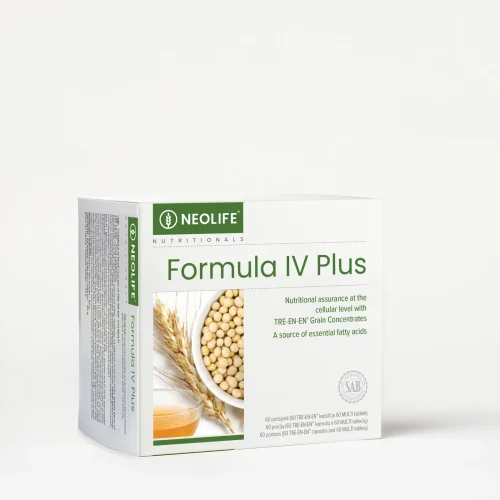
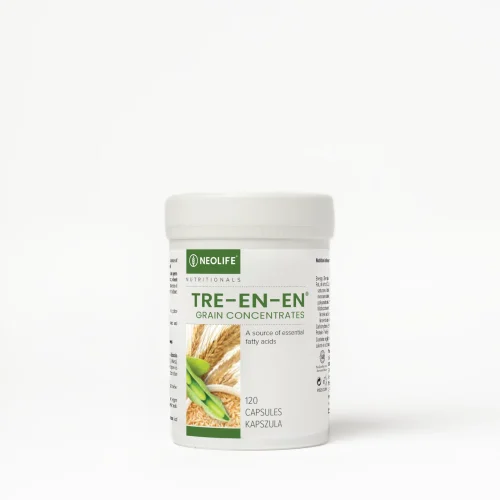
Formula IV Plus is a two-part daily portion: a multivitamin and mineral tablet providing 17 vitamins and minerals, plus a Tre-en-en Grain Concentrate capsule containing lipids and sterols from rice bran, soybean and wheat germ oils. You take the tablet and capsule together, once a day, and a box holds 60 portions, so two months.
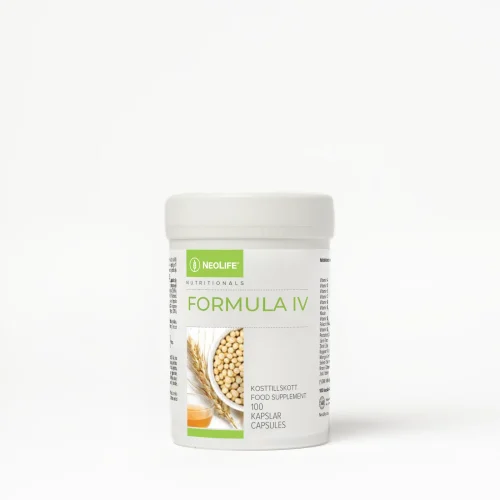
Its defining feature is that it is iron-free, which makes the iron-spacing question less of an issue if this is your only daily supplement. The tablet provides 3.75 micrograms of vitamin D (75% of the NRV), so if you add a separate vitamin D product in winter, include that figure in your total. It contains wheat, soy and gelatine. If you specifically want a version with iron, NeoLife makes Formula IV as well.
Products in this guide
Common questions
Is it bad to take vitamins at night?
No. For a typical multivitamin there is no strong reason to prefer morning over evening. If your evening meal is the most regular meal of your day, taking your supplement with it is a sensible choice. The aim is to take it with food and to take it consistently.
Can I take vitamins with coffee or tea?
For most vitamins this is fine, though taking them with a meal is better than with a drink alone. Iron is the exception: NHS guidance on iron tablets advises leaving a 2-hour gap from tea, coffee and dairy, because these can reduce how much iron is absorbed.
What should I do if I forget a day?
Simply take your usual amount tomorrow. Doubling up does not make up for the gap and simply raises your intake for one day. If you forget often, move your supplement to a meal you never skip or keep a day’s supply in a small pill box.
Can I take a multivitamin and vitamin D together?
Usually, yes, but add up the vitamin D from everything you take. The NHS suggests 10 micrograms a day in autumn and winter and says adults should not exceed 100 micrograms a day. Many multivitamins already contain some vitamin D, so the total is what counts.
Should vitamins be taken on an empty stomach?
Generally not. A multivitamin is better taken with a meal, both for the fat-soluble vitamins and to avoid feeling sick. Prescribed iron is different and may work best away from food, so follow the instructions from your GP or pharmacist for anything they have prescribed.
Genuine NeoLife, delivered in the UK
Free UK delivery on orders over £150. Order online, no membership needed.
Supplements are there to support your diet, not to stand in for it: they are not a substitute for varied, balanced eating and healthy habits. This article is general guidance and not medical advice. Anyone who is pregnant, on medication or living with a health condition should talk to a pharmacist or GP before changing what they take.
For calcium and vitamin D products, see our bone nutrition range.
More guides
 GuidesHow Long Do Supplements Take to Work? An Honest TimelineThere is no single answer: this guide sets out real NHS timelines, explains why feeling different is a poor test, and shows how to…
 GuidesMeal Replacement Shakes: What They Are and How to Use One SensiblyA factual look at meal replacement shakes: what goes into one, how a serving stacks up against daily protein and fibre needs, and how…
 GuidesCreatine Monohydrate: What It Is, Who It Suits and How to Take ItA plain-English guide to creatine monohydrate: what it does, who it suits, why 3g a day matters and how to fit it into a…